Avanti! participates in the Kaija Saariaho Village at Tampere Hall

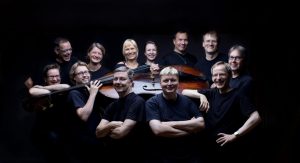
Su 10.3.2019 at 19 Tampere-taloAVANTI-photo-Marco-Borggreve-1024x558

The main event of theKaija Saariaho Village in Tampere Hall in March will be the Finnish premiere of the ensemble version of Saariaho’s masterful oratorio La Passion de Simone.

La Passion de Simone is based on the life and ideas of the French philosopher Simone Weil (1909-1943), who impressed Saariaho as a teenager. The fifteen-station oratorio is inspired by the fourteen stops on Jesus’ Way of the Cross, the fifteenth being the end of the journey.

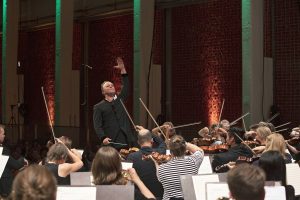
The work features Saariaho’s trusted orchestra Avanti! and the Paris-based musical theatre group La Chambre aux echos. The vocal soloist is Japanese soprano Sayuri Araida and the actress is French actress Isabelle Seleskovitch. The conductor is Clément Mao-Takacs and the stage director is Aleksi Barrière.

Read more about the concert on the Tampere Hall website.

Basic ticket 44/38 €, pensioners 40/34 €, students and children 20 €

Tickets on sale at Lippupiste.

Avant’s Case Black concert is part of Musica Nova festival 10.2.2019

Sun 10.2.2019 at 19.15 Sonore Hall, Music HallClement Power

Avant’s season of concerts kicks off in February, when the Case Black concert invites the audience to enjoy contemporary music as part of the Musica nova Helsinki festival. Avanti! will offer an interesting selection of Canadian contemporary music from recent years, with soprano Anu Komsi as soloist and Clement Power as conductor.

Nicole Lizée (b. 1973) is a Canadian contemporary composer whose music can be described as musical science fiction. Lizée’s music is inspired by 60s psychedelia, early music videos and films by Alfred Hitchcock, Stanley Kubrick and Quentin Tarantino. Black Midi (2016) by Avant combines an onstage string quartet with a video work. In this work, video takes on an equally essential role as music. The musicians play electronic and mechanical toys, creating a kind of TV drama full of unintentional humour. The result is an impressionistic and hallucinatory dimension.

Soprano Anu Komsi performs Claude Vivier ‘s Bouchara for soprano, chamber orchestra and tape (1981). Bouchara is, in the composer’s words, “a love song whose words are an invented language, a language of love that tells a story that keeps repeating itself”. The work is part of a series created by the composer around the theme of Marco Polo. The city of Bouchara, Uzbekistan, on the Silk Road, is linked to the journey and is included in the tape part of the work.

The title of the work by Croatian composer Mirela Ivicevic (b. 1980), Case Black, refers to the year 1943, during the Second World War, when the fascist central powers tried to defeat the Yugoslav resistance movement. The project was unsuccessful, but the fighting claimed an extraordinary amount of human lives. One of the many partisans killed in the Battle of Sutjetska was the composer’s Croatian grandfather. The composer says that his work is a response to the current political climate in Croatia, which has led the country towards extremism.

In the music of Matthew Whittall (b. 1975), a Canadian composer living in Finland, one can hear a Finnish-Canadian connection to nature, an appreciation of freedom and at the same time an experimental and direct expression. Whittall’s February concert will feature Night, sleep, death and the stars for various flutes and harp, named after Walt Whitman’s poem A clear midnight. Impressionistic and dreamlike, the work takes you to the other side of the unconscious.

Ticket prices 13/20/26 €. Tickets on sale at Ticketmaster.

Performers:

Avanti! chamber orchestra
Clement Power, conductor
Anu Komsi, soprano

Programme:

Matthew Whittall: Night, Sleep, Death and the stars (20′)

Claude Vivier: Bouchara (13′)
***

Mirela Ivicevic: Case Black (10′)

Nicole Lizée: Black Midi (25′)


Duration approx. 1h 30 min incl. intermission

Eila Nevalainen appointed as the new president of Avant Chamber Orchestra

Eila Nevalainen has been elected as the new President of Avant Chamber Orchestra for 2019-2020. Previously the press officer of President Tarja Halonen and spokesperson for European Commissioner Erkki Liikanen, among others, Nevalainen has been a member of the Pro Avanti! Association since last summer. “I am genuinely excited about this opportunity,” said Mr Nevalainen, adding, “I like a lot of contemporary music and it is therefore a particular honour to be involved in the Avant Chamber Orchestra, which plays a lot of music of our time.”

Timo Ahtinen, Avant’s musician and double bassist, who has been the chairman since April 2018, is leaving Pro Avanti! Association at his own request and will continue as Vice-Chairman.

Pro Avanti! The Board of Directors of Pro Avanti Association also includes Emilie Gardberg, Antti Räikkönen, Tom von Weymarn, Kaija Saariaho, Valtteri Malmivirta, Heljä Räty and Antti Suoranta. Hanna Juutilainen and Mikko Ivars are alternate members.

Kari Kriikku will continue to serve as Avant’s Artistic Director and Annika Mustonen as Executive Director.

Avanti! will next perform in public at the Musica nova festival on 10 February 2019 in Sonore Hall of Helsinki Music Centre. Further information here.

Forward! – Avanti at the Nordic Music Days

Fri 9.11.2018 at 19 Temppeliaukio Church

The annual Nordic Music Days will be held again this year in Helsinki. As usual, the festival presents a wide range of contemporary Nordic music. This year’s theme extends a geographical handshake to Scotland, as Avant’s Forward! concert will feature the Clarinet Concerto by Scottish composer Helen Grime, with Lauri Sallinen as soloist. The chamber opera Traum, composed by Swedish composer Magnus Bunnskog, features soprano Mia Heikkinen and baritone Joonas Asikainen as soloists. The concert will be conducted by Anna-Maria Helsing.

The Forward! concert is the second part of a two-concert series on Friday evening, the first of which will feature the Zagros Ensemble in the Shadows of Silence.

Avanti!
Anna-Maria Helsing, conductor
Lauri Sallinen, clarinet
Mia Heikkinen, soprano
Joonas Asikainen, baritone

Farangis Nurulla-Khoja (SE): Ni d’ici-ni d’ailleurs
Bjørn Bolstad Skjelbred (NO): Wave-Chains (Liquid Reconstruction 1)
Helen Grime (SCO): Clarinet Concerto
Lars Klit (DK): Furui obakeyashi
Magnus Bunnskog (SE): Dream
Eivind Buene (NO): Sea Change

TICKETS:
22,50€ / 13,50€ (incl. service charge) Buy tickets HERE
Joint ticket to two concerts at Temppeliaukio Church
27,50€ / 17,50€ (incl. service charge) Buy joint ticket HERE

HK Gruber, Frankenstein’s chansonnier and conductor

HK Gruber’s Frankenstein!! – “pandemonium for chansonnier and ensemble” (1977-79) is a cornucopia of styles, stories and characters, to which composer, conductor and singer Gruber adds his own twist of cabaret tradition. It in the groove, the composer talks about his songs and his singing.

The subtitle of Gruber’s work, “Pandemonium”, means chaos, pandemonium, why not a little pandemic, a global epidemic. The “Chansonnier” as soloist suggests that the vocal part of the work calls for something more than a trained operatic vibrato.

Frankenstein!! is in the repertoire of many conductors, but on this planetc1cb6dcafac490342049c7f80e00586dThere are only a few singers who can perform it,” says HK Gruber, who has sung solo in countless performances of his work. “Once in America, I missed a performance because of a flight cancelled due to the weather. David Robertson, conductor of the St. Louis Symphony Orchestra, shorthanded the vocal part, and his assistant jumped in to conduct. I sat in the Chicago airport waiting for the storm to pass and was told that the concert had gone well.”

In the late 60s, Gruber and a few friends formed the MOB-art & tone-ART group of artists, all of whom were actors, musicians and singers. “Even the cellist Heinrich Schiffwas part of it at the time,” Gruber says. “As a child, I sang in the Wiener Sängerknaben boys’ choir. In this group I rediscovered singing and developed my own singing style. I have always called myself a chansonnier instead of a baritone soloist.”

The right style was found in Berlin, where Gruber met the famous actor Ernst Busch (1900-1980). “Busch collaborated with Bertolt Brecht and Hanns Eisler, who composed numerous protest songs. Busch, who was also an accomplished singer, practically spoke in the tune written by the composer. In this style, the r’s must roll properly and the consonants must be explosive. The vowels also need to be sharp and wide, in complete contrast to the carefully formed and placed a’s and y’s of classical singing,” Gruber says with a murmur.

Gruber himself is the only one who both leads and sings his hit song. “There are surprises and theatrical elements, which are supported by performing in both roles.”

Songs by Kurt Weill and Hanns Eisler3e493a37e4f89a59f43b7ef80a0e673e
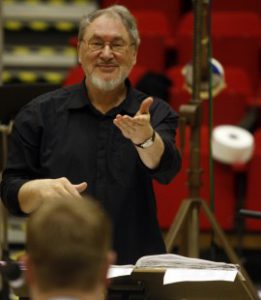
“I was introduced toKurt Weill’s symphonies in the early 1960s. At that time, his output was known, of course, for the Three Penny Opera, but not much was known about his symphonies.” Gruber says. An early recording of The Rise and Fall of the City of Mahogany led Gruber not only to Weill’s symphonic expression, but also to clear and articulate singers. “Despite the stripped-down and simple style, the composer’s bright intelligence remains.”

Arnold Schoenberg taught Hanns Eisler, who was extremely poor but considered the most talented of his students, for free. “Eisler, of course, also learned the 12-tone technique and in 1924 was the first composer to write a work using this technique.” Eisler moved to Berlin in 1927, where he met Bertolt Brecht. “Both were political leftists and sought to influence the political climate created by the rise of National Socialism through art. Eisler composed agit-prop (agitation and propaganda) songs to Brecht’s texts, known as ” Kampfmusik “, and they were performed by Ernst Busch and others!”

Eisler composed a lot of atonal music, but his songs were very simple agit-prop songs that people sang in the streets. Schoenberg was not necessarily particularly enamoured of his pupil’s work, says Gruber: “Schoenberg declared that a composer’s only duty was to write symphonies. Eisler replied that the composer’s only duty was to do useful things.”

By 1935, the world changed irrevocably and Eisler had to flee via Denmark and Sweden to the United States, where he lived until 1947. On his return to Europe, he first settled in Vienna. “He was Austrian by birth and kept his passport even when he later lived in the GDR. The politicians there were annoyed by Eisler, who travelled relatively freely on the basis of his passport, but the composer did not seem to mind. It was in the GDR, however, that he died.”

Eisler, a left-winger, was not hired by the Vienna Music Academy for fear of losing the post-war Marshall Plan aid from the United States. “This was, of course, complete nonsense,” Gruber snorts. “Just think, if it had been otherwise, I would probably have become Eisler’s pupil!”

Of the songs chosen for the Avant concert, Gruber says: “Weill, Brecht and Eisler are my role models. They showed the importance of the text and the musical structure, which has much to offer contemporary music.”


18.10. kl2756a0fde343078a166863ff13cb0e64o 19.00
Temppeliaukion kirkko, Helsinki
Avanti!, dir & sol. HK Gruber
Kurt Weill; Hanns Eisler: Songs
Louis Andriessen: Workers Union
HK Gruber: Frankenstein!! Pan-demonium for singer and orchestra to poems by H. C. Artmann

Tickets 32/27/15 € (+ delivery charges).
Lippu.fi



Avantin Frankenstein!! Temppeliaukio church 18.10.2018

Frankenstein!!

Thu 18.10.2018 at 19 Temppeliaukio Church

Following its successful Summer Play Festival, Chamber Orchestra Avanti! returns to the Helsinki audience full of the will to perform. The autumn concert presents composer, conductor and singer H.K.Gruber, whose breakthrough work Frankenstein!! (1977-79) is the main work of the concert.

Buy tickets HERE
Tickets 32/27/15 € (+ Lippupiste delivery charges).

Performers:

Avanti! Chamber Orchestra

HK Gruber, conductor and vocal soloist

Programme:

Kurt Weill: Berlin in the light

Hanns Eisler: Ballad of charity

Hanns Eisler: Ballad of the bag-snatchers

Hanns Eisler: Ballad of Nigger Jim

Kurt Weill: Oil music

Louis Andriessen: Workers Union

HK Gruber: Frankenstein!!

Pan-demonium for singer and orchestra to poems by H. C. Artmann:

Fanfare, Prologue.

Dedication / Miss Dracula

Goldfinger and Bond / John Wayne / Monster

Monsterlet

Fanfare, Intermezzo

Frankenstein

Rat Song and Crusoe Song

Superman

Finale: The green-haired man / Batman and Robin / Monster in the Park


Austrian-born HK (Heinz Karl) Gruber (b. 1943) laid the foundations for his musical career in the world-famous Wiener Sängerknaben boys’ choir, in whose ranks he sang during his school years. His full-time musical studies followed at the Vienna Musikhochschule, where he studied composition and other subjects.

Gruber started his career as a double bassist with die reihe ensemble and then had a long career with the Austrian Radio Symphony Orchestra, where he was a member from 1969 to 1998. Gruber is also a singer-actor and founding member of the MOB-art & tone-ART artist collective.

HK Gruber’s distinctive musical language has brought him considerable international success. His official style is “diatonic serialism”, but his breakthrough work Frankenstein!! (1977-79) has more ingredients than any compositional school that has made it into the history books will allow, which is probably the secret of the hundreds of performances it has received. The work is now being performed in Helsinki for the first time.

In Avant’s autumn season concert, HK Gruber is not only the composer but also the conductor and singer. His own work is a major conductor’s showpiece, requiring a varied and bold vocal and theatrical expression. The orchestra’s arsenal includes toy instruments. In turn, songs by Kurt Weil and Hanns Eisler at the beginning of the programme reveal Gruber’s skills in songwriting.

Louis Andriessen’s Workers Union is, according to its composer, a combination of individual freedom and strict discipline. The rhythm is well defined, but the tonal levels are only indicative. It is demanding to play and march in the same steps, a bit like doing politics: the idea of expression and the execution of expression require different things. Avant’s talents as a collective are put to full use!

The concert is supported by the Pro Musica Foundation.

Avanti! Old and gay at Musiikkitalo 19.11.2018

avanti-tk

Mon 19.11.2018 at 13 Music House, Rehearsal Room Paavo

Nothing is what it looks like,
everything is what it sounds like.

Among the unlimited range of styles in the concert, the latest music is right at home. The sound of the Avant String Quartet blends with the wide arsenal of Marzi Nyman, Arttu Takalo and Tero Toivonen.

The concert is part of a joint AUF concert series by Avant, UMO and FiBO.

Tickets 11€ (incl. service charge). Tickets sold by Ticketmaster.

Avant’s chamber group performs in Pukkila and Kangasala in autumn

Avant’s chamber ensemble performs on Sat 25.8. at 19 in Pukkila Church and Wed 3.10. at 19 in Kangasala Hall. The concerts are part of the AUF collaboration project between Avant, the New Music Orchestra and the Finnish Baroque Orchestra.

Sat 25.8. at 19:00 Pukkila Church: from Beethoven to Ellington – classics of all time

Programme:

Bartók-Farina-Schumann-Tiensuu-Ellington-Ligeti

Performers:

Avanti! quartet:

  • Anna-Leena Haikola, violin
  • Eriikka Maalismaa, violin
  • Tuula Riisalo, viola
  • Mikko Ivars, cello

Kari Kriikku, clarinet

Jouko Laivuori, piano

Tickets 17,50/11 €, family ticket 22,50 €, series ticket to three AUF concerts in Eastern Uusimaa 43/28 €. Tickets are available at the Askola library, Hyvinvointikeskus Onni in Pukkila, Kipa bookstore in Mäntsälä, Mäntsälä municipal service point, Pukkila library, door-to-door sales and Ticketmaster. Only cash is accepted at municipal sales points and doorstep sales. Ticket enquiries: [email protected]. For more information on UMO and FiBO concerts, please visit their websites umo.fi and fibo.fi.

***

Wed 3.10. at 19 Kangasala-talo: Avanti! Chamber ensemble: all-time classics

Programme:

Bartók-Farina-Schumann-Tiensuu-Ellington-Ligeti-Pärt

Performers:

Avanti! quartet:

  • Anna-Leena Haikola, violin
  • Eriikka Maalismaa, violin
  • Tuula Riisalo, viola
  • Mikko Ivars, cello

Kari Kriikku, clarinet

Jouko Laivuori, piano

Tickets from Kangasala-talo 22/20/10 €, Lippu.fi 24,50/22,50/11,50 € + delivery charges (from 1 € www.lippu.fi)

The XXXIII Summer Festival was a success, with conductor Baldur Brönnimann as artistic designer for next year’s Summer Festival

Sunday marked the end of Avant’s 33. The summer concert was a success. The ticket sales target for the concerts was exceeded, and the feedback from both the public and the media has been positive.

The trio who planned the summer concert, long-time Avant-garde musicians Timo Ahtinen, Hanna Juutilainen and Jukka Rautasalo, created the programme with an Avant-garde approach, covering music from as wide a time period as possible. The festival’s home towns of Pernaja and Porvoo were also present in the selection of works. The XXXIII Suvisoito featured a total of 12 concerts in Pernaja, Porvoo Tuomiokerko, Pikkukerko and Taidetehta. The programmes included music from the 15th century to the present day. In addition to the festival fanfare composed by Jukka Tiensuu, the programme included three other premieres. As always at Suvisoito, one of the concerts was dedicated to children.

Launched in spring 2018, Pro Avanti! Association will continue the activities of the chamber orchestra Avant and the Suvisoitto Festival, which has been closed down due to financial difficulties. ry. Avanti! is looking to the future with confidence, even though its finances are significantly tighter than before.

So Avant’s work continues and planning for the next Summer Play is already underway. Swiss-born conductor Baldur Brönnimann is planning the XXXIV Summer Festival. The next Summer Festival will take place on 26-30 June 2019.


Baldur BrönnimannBaldur Brönnimann

Conductor Baldur Brönnimann has made a name for himself as an interpreter of new music. He is Principal Conductor of the Basel Symphony Orchestra and the National Orchestra of Porto in Portugal. Brönnimann’s repertoire is creative and wide-ranging, and he is also an acclaimed opera conductor. He was introduced to Avant at the 2011 Musica Nova Helsinki event. Since then, he has also been guest conductor of the Helsinki City Orchestra.
In his list of nine wishes for what he would like to see happen in classical music in 2018, Brönnimann mentions, among other things, greater risk-taking: “We have a vast amount of recorded data on the interpretation of works, which can be a barrier to personal approaches. Classical music needs more raised eyebrows.” He also challenges orchestras to have the courage to bring music they believe in into their programmes. “There is quite enough populism around us today. Let’s at least keep it out of the concert halls.”

XXXIII Summer Concert 30.6. at 18:00: texts of the songs from the Kläätasku programme that were omitted from the manuscript programme and Schönberg’s String Quartet No 2

XXXIII Summer Concert 30.6. at 18:00: texts of the Kläätasku songs omitted from the manuscript programme and Schoenberg’s String Quartet No 2, parts Litanei and Entrückung, with texts by Stefan George (suom. Jan Granberg).

Heinz-Juhani Hofmann: Kylätasku songs (texts by Jussi Kylätasku)

1.

Put me in a porous soil
that I may burn with a small flame steadily to the end, I shall crack, crack, crack in a regular manner into my parts
and feed more than ever with my wages
when the earth is only porous, its breath warm and dry.
(Good News, p. 58)

2.

The subject of the poem is a plastic ear through which light shines steadily.

It’s hard to admit that you’re interested in what you don’t have;

From a certain angle, the junction of the neck and shoulder.

In a way, you become aware when love dies.

(Private entrepreneurs, p.13)

3.

I’m sitting in a smoky room; it’s raining. At least not inside.
I won’t be sad.
Dear friend, what are you waiting for: the same old crap?

A trip to the centre of the country for a little money, what are you waiting for

The gang is on the move, the world is changing, but society is being built to last. The world is maturing beautifully to a serene end, to a fitting starry sky, the cosmonaut aware of his minute when the capsule goes into a spiral;

In his shares of the working and unemployed, the poet alienates himself from Oulu in a semblance of harmony.

(Private entrepreneurs, p.11)

4. SONG

October is birdless, songless, the forest slows down in front of your eyes.
A drowned youngster can be heard through the snowless ice.
It looked so damn tall.
It’s at least ten feet tall. A blue-grey striped suit. One shoe loose, red ankle sock, V-patent collar, tie somewhat wrapped.

Counts heartbeats on a wristwatch.
(Private entrepreneurs, p.19)


Litany

Deep is the grief that doth shake me, I will enter again, O Lord, into thy house.

The journey has been long, the limbs are dull, the shrines are empty, the agony is full.

Thirsty tongue dying to cry. Hard was the quarrel, stiff is my arm.

Give rest to faltering steps, hungry gaume crumble your bread!

Weak is my breath calling to the dream, hollow are the hands, feverish the mouth.

Lend your coolness, put out the fires. Extinguish the hope, send the light!

The glowing embers in the heart are still open, A cry still awakes in the depths.

Kill the longing, close the wound! Take away my love, give me your happiness!

Rapture

I feel air from another planet.
I am pale through the darkness the faces that turned to me friendly a moment ago.

And trees and paths that I loved pale That I hardly know them any more And thou light beloved shadow-caller of my torments–

Are now extinguished in deep glow To suggest with a pious shudder the staggering disputing getobes.

I loose myself in tones, circling, weaving, surrendering to the great breath without wishing, to fathomless thanks and unnamed praise.

I am overtaken by an impetuous wind
In the frenzy of consecration where fervent cries plead In dust thrown praying women:

Then I see how fragrant mists hatch
In a sun-filled clear free
That only embraces on farthest mountains hatch.

The floor is white and soft as whey. I’m climbing over gorges immense.
I feel like I’m over the last cloud

In a sea of crystalline brilliance I swim– I am a spark only of the holy fire
I am a roar only of the holy voice.

Litania

Deep is the sorrow that darkens me, And again, Lord, I enter your house.

It’s been a long journey, the members are tired,
The trunks are empty now, it’s just a pain in the ass.

A dry tongue craves a splash of vodka.
It was a tough struggle, now my arm is numb.

Give peace to the weary steps, To the hungry mouth break a piece of your bread!

Weak breathing, crying out in sleep, Empty palms, feverish mouth.

Lend your cool, extinguish the flames, Redeem hope, give a ray of light!

Glowing widows, fluttering in the chest, Inside the deepest still a cry waits.

Kill the longing, stop the bleeding wounds! Take from me love instead of your happiness!

Exit

I can feel the airflow from other planets. Fading in the darkness are faces
that kindly turned to me.

And the trees and roads I love will fade so that I hardly know them and the bright beloved shadow-interpreter of my pains–

You’ve gone all out in a deep-blue glow to dampen the post-rapturous exclamation of elation to a pious shudder.

I break free to the sounds, spinning, spinning, endless praise and anonymous praise, a huge breath of hopeless surrender.

A furious breeze blows over me
in a holy din where the cries of worshippers thrown into the dust rush:

Then I see how the humid mist rises in a light-filled, bright freedom that reaches to the farthest mountain peaks.

The ground beneath quivers as soft and white as milk. I rise above the distant gorges.
I feel how on the last clouds

I swim in a sea of Christian glory–I am but a tiny flame of holy fire, just a breath of holy sound.

J.L.Runeberg:Andranatten http://www.svensklyrik.se/poeter/johan-ludvig-runeberg/andra-natten-2