
HK Gruber’s Frankenstein!! – “pandemonium for chansonnier and ensemble” (1977-79) is a cornucopia of styles, stories and characters, to which composer, conductor and singer Gruber adds his own twist of cabaret tradition. It in the groove, the composer talks about his songs and his singing.
The subtitle of Gruber’s work, “Pandemonium”, means chaos, pandemonium, why not a little pandemic, a global epidemic. The “Chansonnier” as soloist suggests that the vocal part of the work calls for something more than a trained operatic vibrato.
“Frankenstein!! is in the repertoire of many conductors, but on this planet There are only a few singers who can perform it,” says HK Gruber, who has sung solo in countless performances of his work. “Once in America, I missed a performance because of a flight cancelled due to the weather. David Robertson, conductor of the St. Louis Symphony Orchestra, shorthanded the vocal part, and his assistant jumped in to conduct. I sat in the Chicago airport waiting for the storm to pass and was told that the concert had gone well.”
In the late 60s, Gruber and a few friends formed the MOB-art & tone-ART group of artists, all of whom were actors, musicians and singers. “Even the cellist Heinrich Schiffwas part of it at the time,” Gruber says. “As a child, I sang in the Wiener Sängerknaben boys’ choir. In this group I rediscovered singing and developed my own singing style. I have always called myself a chansonnier instead of a baritone soloist.”
The right style was found in Berlin, where Gruber met the famous actor Ernst Busch (1900-1980). “Busch collaborated with Bertolt Brecht and Hanns Eisler, who composed numerous protest songs. Busch, who was also an accomplished singer, practically spoke in the tune written by the composer. In this style, the r’s must roll properly and the consonants must be explosive. The vowels also need to be sharp and wide, in complete contrast to the carefully formed and placed a’s and y’s of classical singing,” Gruber says with a murmur.
Gruber himself is the only one who both leads and sings his hit song. “There are surprises and theatrical elements, which are supported by performing in both roles.”
Songs by Kurt Weill and Hanns Eisler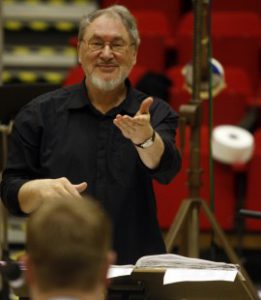
“I was introduced toKurt Weill’s symphonies in the early 1960s. At that time, his output was known, of course, for the Three Penny Opera, but not much was known about his symphonies.” Gruber says. An early recording of The Rise and Fall of the City of Mahogany led Gruber not only to Weill’s symphonic expression, but also to clear and articulate singers. “Despite the stripped-down and simple style, the composer’s bright intelligence remains.”
Arnold Schoenberg taught Hanns Eisler, who was extremely poor but considered the most talented of his students, for free. “Eisler, of course, also learned the 12-tone technique and in 1924 was the first composer to write a work using this technique.” Eisler moved to Berlin in 1927, where he met Bertolt Brecht. “Both were political leftists and sought to influence the political climate created by the rise of National Socialism through art. Eisler composed agit-prop (agitation and propaganda) songs to Brecht’s texts, known as ” Kampfmusik “, and they were performed by Ernst Busch and others!”
Eisler composed a lot of atonal music, but his songs were very simple agit-prop songs that people sang in the streets. Schoenberg was not necessarily particularly enamoured of his pupil’s work, says Gruber: “Schoenberg declared that a composer’s only duty was to write symphonies. Eisler replied that the composer’s only duty was to do useful things.”
By 1935, the world changed irrevocably and Eisler had to flee via Denmark and Sweden to the United States, where he lived until 1947. On his return to Europe, he first settled in Vienna. “He was Austrian by birth and kept his passport even when he later lived in the GDR. The politicians there were annoyed by Eisler, who travelled relatively freely on the basis of his passport, but the composer did not seem to mind. It was in the GDR, however, that he died.”
Eisler, a left-winger, was not hired by the Vienna Music Academy for fear of losing the post-war Marshall Plan aid from the United States. “This was, of course, complete nonsense,” Gruber snorts. “Just think, if it had been otherwise, I would probably have become Eisler’s pupil!”
Of the songs chosen for the Avant concert, Gruber says: “Weill, Brecht and Eisler are my role models. They showed the importance of the text and the musical structure, which has much to offer contemporary music.”
18.10. kl o 19.00
Temppeliaukion kirkko, Helsinki
Avanti!, dir & sol. HK Gruber
Kurt Weill; Hanns Eisler: Songs
Louis Andriessen: Workers Union
HK Gruber: Frankenstein!! Pan-demonium for singer and orchestra to poems by H. C. Artmann
Tickets 32/27/15 € (+ delivery charges).
Lippu.fi